
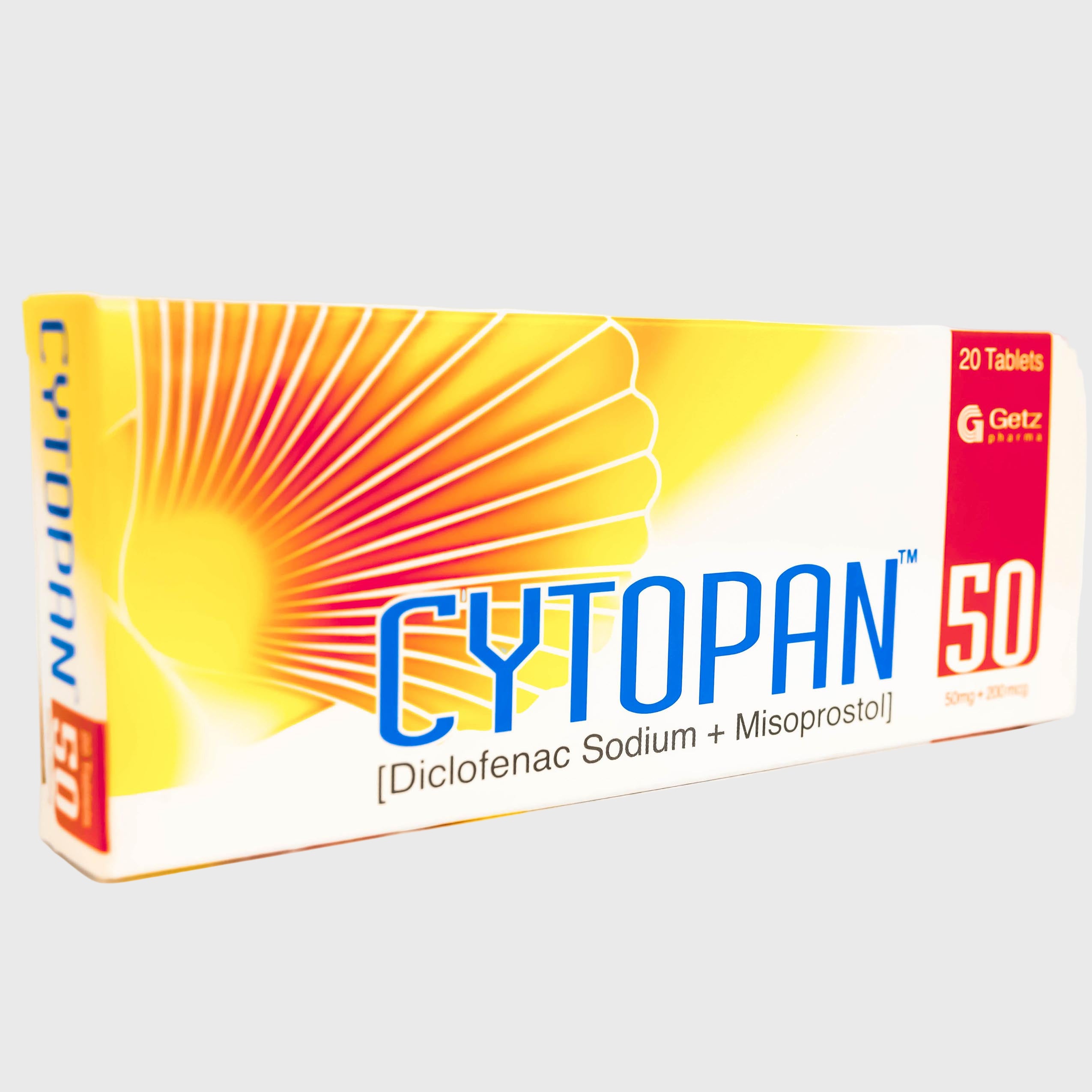
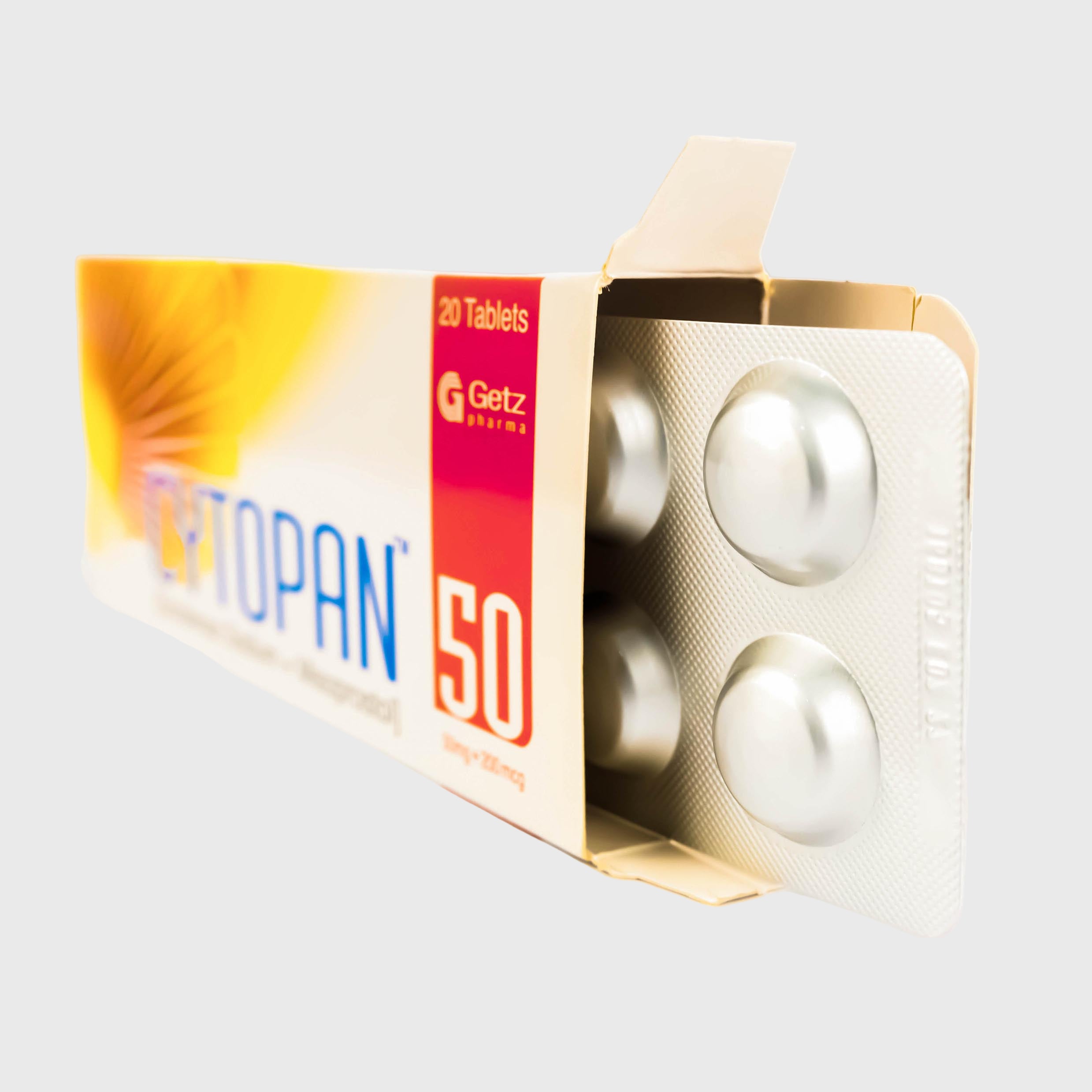
Cytopan 50 mg Tablet

Cytopan 50 mg Tablet – Diclofenac + Misoprostol Pain-Relief & Ulcer Protection

Dual-action pain relief + GI protection: Diclofenac 50 mg + Misoprostol 200 mcg

Designed for inflammatory joint pain with lowered risk of stomach ulcers

In stock
9 People are viewing this right now
Sale price Rs.522.00 PKR
Add to Wishlist

Cytopan 50 mg Tablet

Cytopan 50 mg Tablet – Diclofenac + Misoprostol Pain-Relief & Ulcer Protection

Rs.522.00

Cytopan 50 mg Tablet – Dual-Action for Pain Relief With Gastroprotection

Cytopan 50 mg Tablet combines diclofenac sodium (50 mg), a powerful nonsteroidal anti-inflammatory drug (NSAID), with misoprostol (200 mcg), a prostaglandin analog that protects the stomach lining.
This formulation is especially useful for treating conditions that involve inflammation and pain — like arthritis, back pain, or musculoskeletal disorders — while reducing the risk of gastric ulcers and bleeding associated with long-term NSAID therapy.

  • Strong anti-inflammatory and analgesic effect via diclofenac
  • Reduces the risk of NSAID-induced stomach ulcers or bleeding thanks to misoprostol 
  • Effective for chronic pain conditions like rheumatoid arthritis, osteoarthritis, and ankylosing spondylitis
  • Flexible dosing (can be used short-term or under long-term supervision)
  • Produced by a reputable manufacturer, Getz Pharma

  1. Take one Cytopan 50 mg/200 mcg tablet, as prescribed by your doctor. 
  2. Because diclofenac can irritate the stomach, take the tablet with food or immediately after a meal. 
  3. Swallow the tablet whole with water. Do not chew or crush.
  4. For some conditions, the dose may be up to 3 times daily — only follow your doctor’s direction. 
  5. Never skip doses without consulting your healthcare provider. Continue long-term only under supervision.

Q1: What is Cytopan used for?
A1: It's used for pain and inflammation in arthritis, musculoskeletal disorders, and to reduce risk of ulcers when taking diclofenac long-term. 

Q2: Why does Cytopan have two active ingredients?
A2: Diclofenac relieves pain and reduces inflammation, while misoprostol helps protect your stomach lining from being damaged by the NSAID. 

Q3: How many times a day should I take it?
A3: It varies — often 1 tablet two or three times a day depending on your condition, but follow your doctor’s prescription. 

Q4: What are common side effects?
A4: You may experience nausea, diarrhea, abdominal pain, dizziness, or headache. Dawaai

Q5: Can I take it if I have a stomach ulcer or a history of bleeding?
A5: It’s not ideal — misoprostol reduces ulcer risk, but you should only use it if your doctor thinks the benefit outweighs the risk.

Diclofenac Sodium — 50 mg
Misoprostol — 200 mcg (0.2 mg)
Plus inactive excipients (binders, fillers) as per the product leaflet.

  • Use only under medical advice; combining an NSAID with misoprostol means special risk management. 
  • Avoid if you are pregnant, especially in the later stages — misoprostol can cause uterine contractions. 
  • Use with caution in people with kidney or liver impairment, since diclofenac can affect organ function. 
  • Monitor for signs of gastrointestinal bleeding or ulcers, even though misoprostol reduces this risk.
  • May cause diarrhea, abdominal discomfort, dizziness, or headache.
  • Store in a cool, dry place below 30 °C, protected from light.

Recently viewed products